

El Born has that rare quality of neighbourhoods that work on every level. You can spend a morning looking at medieval ruins beneath the glass floor of the old market, have lunch on a terrace without paying tourist prices, pop into a contemporary art gallery in the afternoon and end the day at one of the best cocktail bars in Europe. All without taking the metro.
It's Barcelona's neighbourhood with the most to offer per square metre. And also the easiest to get wrong if you only scratch the surface.
This guide is about what lies beneath.
What to see in El Born: beyond the must-see list
Santa Maria del Mar
It's not an off-the-beaten-track tip: it's one of the finest examples of Gothic architecture in Europe and deserves a place on any list. But there's a way to see it that very few people take advantage of: go first thing on a weekday morning, when the light slants through the windows and there are no tour groups. The silence and scale of the space are completely different from any other church in the city.
El Born Market
This 19th-century iron market building never actually operated as a market (it was closed before it opened), and beneath its floor lie the remains of the La Ribera neighbourhood, demolished in 1714. The cultural centre it now houses combines the archaeological site with temporary exhibitions. It's worth spending an hour there, especially if you're interested in the city's history.
The Picasso Museum
One of Barcelona's most visited museums, and also one of the most underrated by locals. The permanent collection is housed in five interconnected medieval palaces and traces Picasso's development from his early years in Barcelona to the Las Meninas series. If you last visited more than five years ago, it's worth going back: the temporary exhibitions change the experience quite a bit.
The Catalan Parliament and Parc de la Ciutadella
A five-minute walk from the heart of El Born, the park is the nearest green space and has things most visitors never see: the lake with rowing boats for hire, the Modernista greenhouse, and the monumental fountain partly designed by a young Gaudí. For a Sunday morning with no fixed plans, it's unbeatable.
Where to eat in El Born without falling into a tourist trap
El Born has a well-known problem: lots of restaurants with menus in five languages and quality inversely proportional to the number of languages. These aren't those.
El Xampanyet (Carrer de Montcada, 22) is the neighbourhood's go-to spot for vermouth and tinned seafood. It's been the same for decades and hasn't changed to suit anyone. The house cava is the right call.
La Pepita (Carrer de Montcada, 29) for unpretentious sandwiches and tapas. It's on the same street as El Xampanyet and almost always has a queue, but it moves quickly.
Bar del Pla (Carrer de la Palma de Sant Just, 1, technically on the edge of the Gothic Quarter) for Catalan market cooking in a bar setting. On Thursdays their set lunch menu is one of the best-value meals in central Barcelona.
Paradiso (Carrer de Rera Palau, 4) for cocktails. It's hidden behind what looks like a pastrami fridge and has two floors with a bar to rival anything in the Eixample. It's one of the places featured in Paint Barcelona's cocktail bar guide for after a session at the studio.
Things to do in El Born: the plans you won't find on TripAdvisor
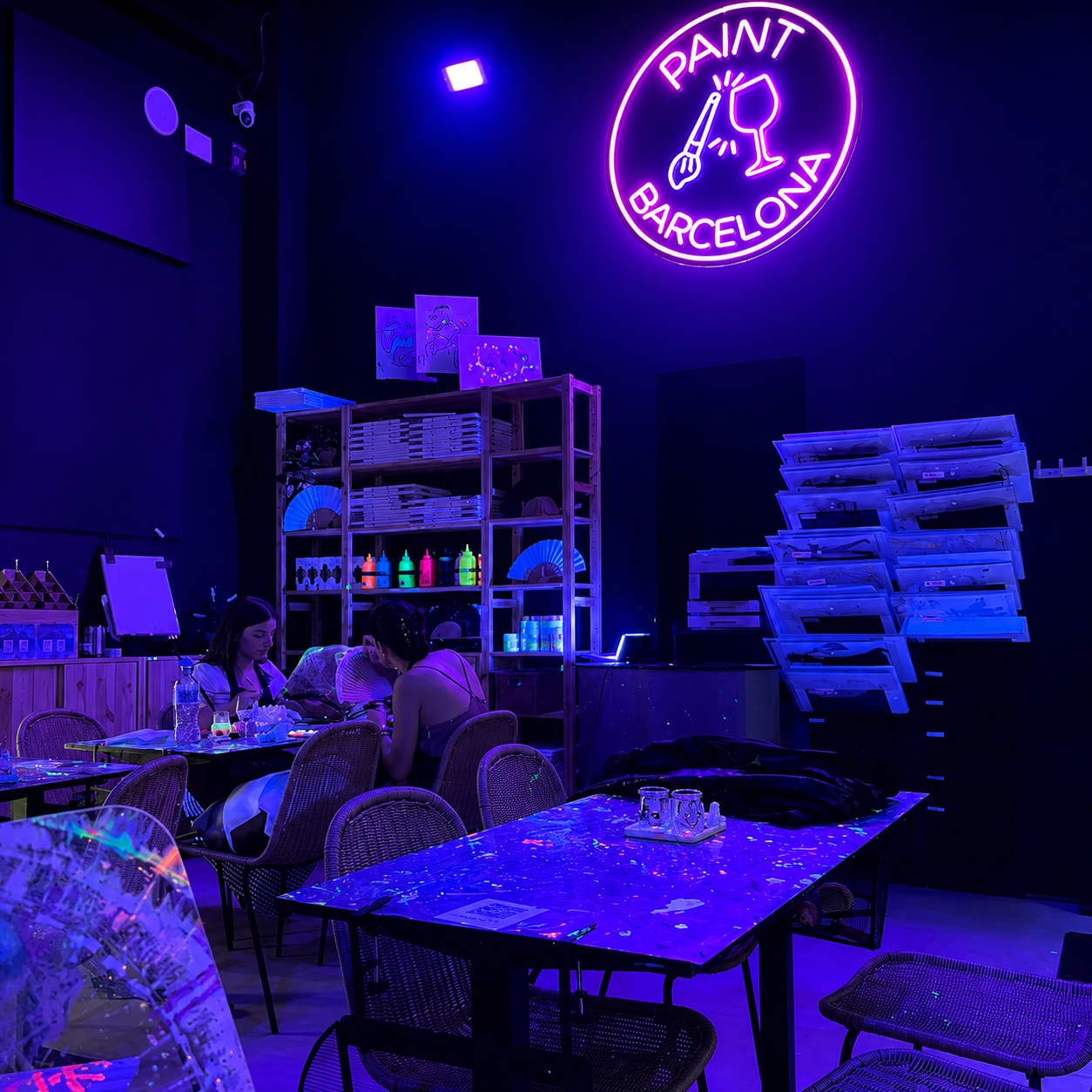
Paint under black light on Carrer de l’Esparteria
Paint Barcelona is in the heart of El Born, a two-minute walk from Santa Maria del Mar. UV painting sessions last between 90 and 120 minutes, include materials and your first drink, and require no previous experience. The Print & Trace method means anyone can create something to be proud of from the very first minute.
It works just as well on a Tuesday afternoon as on a Saturday with a group. And the moment the lights go off and the fluorescent colours burst into life under the black light is hard to imagine until you experience it.
→ Book your session at Paint Barcelona
Paint ceramics in El Born or Gràcia
La Pintoràmica has one of its two studios in El Born, a few minutes from Paint Barcelona. The format is different: you choose a ceramic piece, paint it with glazes at your own pace and collect it fired three days later. It's a slower plan, better suited to long conversations, and leaves you with a keepsake that won't end up in a drawer.
It pairs well with Paint Barcelona if you want two different creative experiences in the same neighbourhood: ceramics in the morning, UV painting in the afternoon.
→ See workshops at La Pintorámica Born
Get lost in the neighbourhood's streets with no itinerary
El Born's layout of medieval streets invites aimless wandering better than any other neighbourhood in Barcelona. Carrer del Rec, Carrer dels Carders, Passeig del Born in the late afternoon. The best moments here aren't on any map: they're in the inner courtyards of the palaces on Carrer de Montcada, in the small bookshops that survive between the design stores, in the bars without terraces because they don't need them.
Visit a contemporary art gallery
El Born has a cluster of art galleries that few people outside the neighbourhood know about. Around Carrer del Comerç and Carrer de l’Allada-Vermell there are several that change their exhibitions every month and are free to enter. Perfect if you want art without paying museum prices.
How to plan a full day in El Born
A plan that works well if you have a whole day:
Morning: Santa Maria del Mar first thing + a walk along Carrer de Montcada + El Born Market. If there's time, a stroll around Parc de la Ciutadella.
Midday: vermouth at El Xampanyet or Bar del Pla.
Afternoon: a creative session at Paint Barcelona or a ceramics workshop at La Pintoràmica. Book ahead, especially at weekends.
Evening: dinner at one of the neighbourhood's restaurants + a cocktail at Paradiso or Dr. Stravinsky.
A full day without leaving El Born. No metro, no Uber, no rushing around like a tourist ticking things off a list.
Frequently asked questions about El Born, Barcelona
How do I get to El Born by metro?
The nearest stop is Jaume I, on line 4 (yellow). From there it's a five-minute walk to the heart of the neighbourhood.
When is the best time to visit El Born?
El Born is great all year round, but spring and autumn offer the best mix of weather and crowds. In summer the neighbourhood is packed with tourists; in winter it's quieter and indoor plans (workshops, museums, cocktail bars) really come into their own.
What's the difference between El Born and the Gothic Quarter?
The Gothic Quarter has more monuments and more mass tourism. El Born has more neighbourhood life, better restaurants and a more contemporary cultural scene. They're right next to each other and complement each other well in a single day.
Are there creative activities in El Born?
Yes. Paint Barcelona (UV painting) and La Pintorámica (ceramics) both have studios in the neighbourhood and offer sessions for all kinds of groups and people, with no previous experience needed.
Is El Born safe?
Yes. It's one of the safest neighbourhoods in central Barcelona. As in any tourist area, keep an eye out for pickpockets in the busiest spots.