

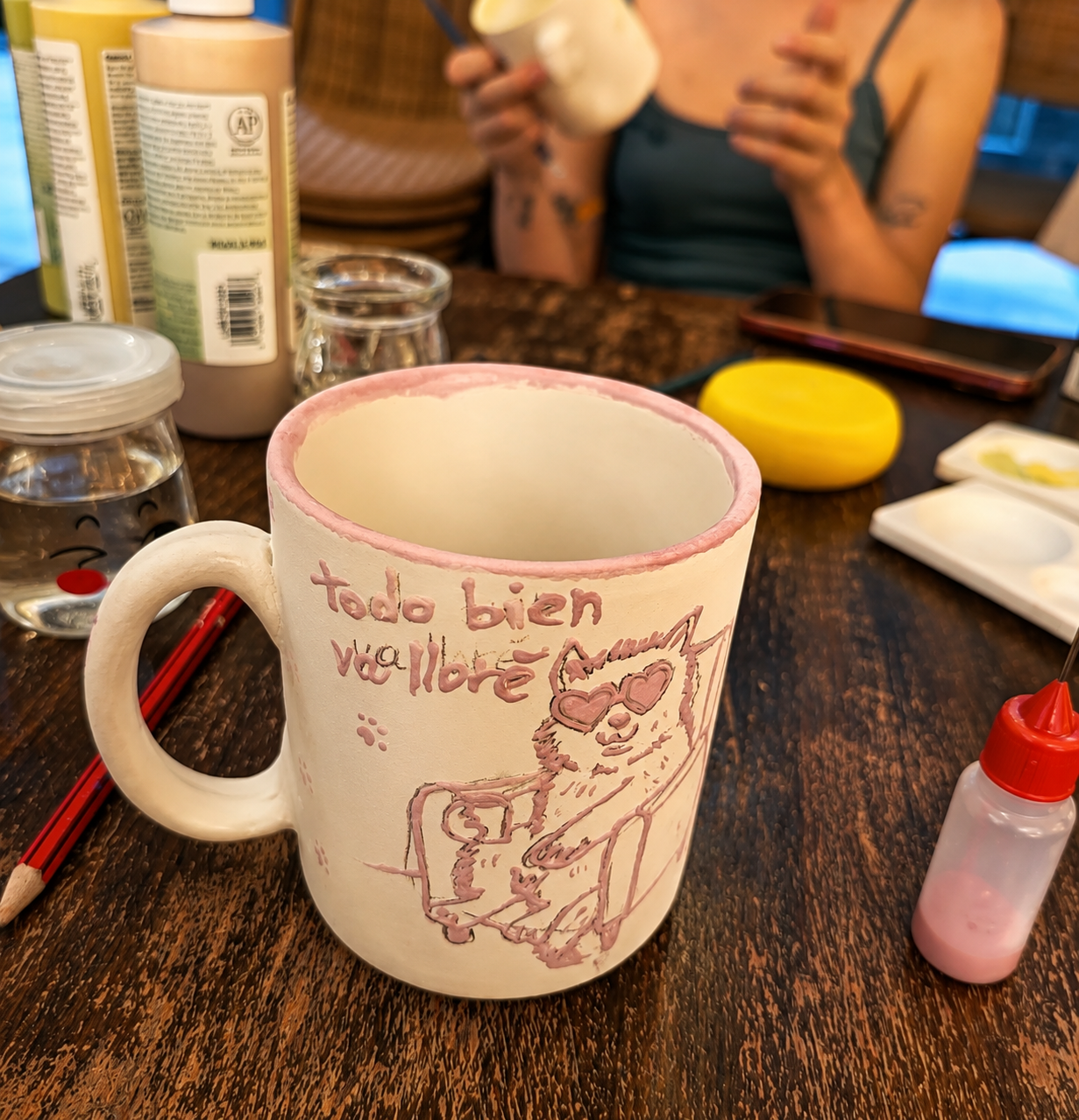
Painting ceramics works differently from painting on paper or canvas. The surface is different, the materials are different and the result takes longer to arrive — the piece goes into the kiln and you come back for it a few days later. That wait, which might seem like a drawback, is actually part of what makes the experience special.
This guide covers everything you need to know about painting ceramics in Barcelona: what techniques there are, what materials are used, how the process works from start to finish and where to do it if you'd prefer a guided workshop.
What ceramic painting is and how it differs from the pottery wheel
People often confuse painting ceramics with making pottery on the wheel. They're two completely different activities.
The pottery wheel involves shaping raw clay by hand on a spinning wheel: creating the form from scratch, managing the clay's moisture and learning to centre it. It takes ongoing practice and isn't something you master in a single session.
Painting ceramics means decorating a piece that has already been shaped and bisque-fired — a mug, a bowl, a plate… — with coloured glazes that are fixed in the kiln. It's completely accessible to anyone with no previous experience, and the end result, once fired, is a professionally finished ceramic piece that lasts for years.
In Barcelona, most beginner workshops use the second format. It's more versatile, better suited to one-off sessions and produces results that surprise even people who have never held a brush.
What materials are used to paint ceramics
Ceramic glazes
These are the paints made specifically for ceramics. They're applied to the bisque-fired piece and permanently fixed in the kiln at high temperatures. The colour before firing is always different from the final colour: many glazes look dull when raw and are completely transformed by the heat.
There are two main types:
Opaque glazes: they cover the surface completely and give solid, vibrant colours. They're the most widely used in beginner ceramic painting workshops.
Translucent or water-based glazes: they let the texture of the surface show through the colour, creating subtler effects with more depth.
UV fluorescent glazes
This is the speciality of Paint Barcelona: glazes specially formulated to react under black light. In normal light the piece shows bright colours, and under UV light it looks completely different, with colours that glow intensely. This is what makes Paint Barcelona's ceramic pieces unique compared with any other workshop in the city.
Brushes for ceramics
The brushes are similar to those used for acrylic painting, with a few differences: glazes are thicker and need more coats for even coverage. Soft-bristled brushes are best for avoiding brush marks on the final surface.
Comparison of ceramic painting techniques
| Technique | Materials | Level | Result after firing |
|---|---|---|---|
| Opaque glazes | Brush + coloured glaze | Beginner | Solid, glossy colour |
| Translucent glazes | Brush + diluted glaze | Intermediate | Textured watercolour effect |
| UV / fluorescent glazes | Brush + UV glaze | Beginner | Glows under black light |
| Underglazes | Brush + underglaze | Intermediate | Matt colours with fine detail |
| Combined techniques | Various brushes and glazes | Advanced | Complex, unique effects |
How the ceramic painting process works, step by step
1. Choose your piece
The first decision is what you want to paint. Workshops in Barcelona usually offer a wide selection: mugs, bowls, plates, figures and tiles. At La Pintoràmica there are more than 100 different pieces to choose from. At Paint Barcelona you can choose between mugs, bowls and plates.
The piece you choose determines how complex the design will be: a mug has a curved surface that means adapting the design, while a flat tile is easier for beginners to control.
2. Prepare the design
In a guided workshop, the team helps you with this stage. For example, at Paint Barcelona the Print & Trace method lets you bring any design, print it and trace it onto the piece with the help of UV light. That way, anyone can get an accurate result without having to draw freehand. For its part, La Pintoràmica also lets you bring a reference or take inspiration from the workshop's own designs.
3. Apply the glazes
The basic technique is to apply several thin coats of glaze rather than one thick one. Each coat must dry before you apply the next; drying time is short, between 5 and 10 minutes depending on the glaze and the room temperature.
Mistakes can be corrected before firing: raw glaze can be removed with water and a cloth, or covered with another coat of opaque glaze.
4. Firing
Once the session is over, the pieces go into the kiln. The process takes between 24 and 48 hours. During firing, the glazes fuse with the ceramic and the colours are transformed: opaque glazes become glossy, and UV glazes take on their final fluorescent properties.
5. Collect your piece
After 2–3 days, your piece is ready to collect. The final result always surprises: the difference between how it looks raw and how it looks after firing is huge, especially with UV glazes.
Where to paint ceramics in Barcelona
Paint Barcelona — El Born
Paint Barcelona is at Carrer de l'Esparteria 12, in the heart of El Born. What sets it apart is UV painting: its fluorescent glazes make the pieces glow under black light in a way no other ceramics workshop in Barcelona offers.
Sessions last between 90 and 120 minutes and include the piece, all materials and your first drink. The Print & Trace method means anyone can achieve an accurate design on their first attempt. Pieces are collected from the studio 3 days after firing.
From €15 per person. Ideal for groups, couples, hen and stag parties, and solo plans.
→ Book a UV ceramics workshop at Paint Barcelona
La Pintoràmica — Gràcia and El Born
La Pintoràmica has two studios in Barcelona, one in Gràcia and one in El Born, with more than 100 ceramic pieces to choose from: mugs, bowls, plates, figures, tiles and much more. It's the option with the widest variety of shapes and a calmer atmosphere, ideal if you want a relaxed afternoon with no time pressure.
Sessions last about 100 minutes and the pieces are collected fired and glazed a few days later. They also run special ceramics and wine sessions, which are especially popular with couples and groups of friends.
→ See workshops at La Pintoràmica
Paint Barcelona vs La Pintoràmica: two great options for painting ceramics
| Paint Barcelona | La Pintoràmica | |
|---|---|---|
| Location | El Born | El Born and Gràcia |
| What sets it apart | UV glazes that glow under black light | 100+ pieces, artisan atmosphere |
| Price from | 15 € | 15 € |
| Collection | 3 days | 3 days |
| Wine session | No | Yes |
| Book online | Yes | Yes |
The two workshops complement each other rather than compete. If you're after the UV effect and the wow factor, choose Paint Barcelona. If you want more variety of pieces and more of an artisan studio feel, choose La Pintoràmica. Some groups do both in the same weekend.
Tips to get the most out of your session
Wear clothes you don't mind getting dirty. Raw glazes stain, and although they wash out, there's always the odd drop that won't come off.
Decide on your design before you arrive. Having a clear reference — a photo, a drawing, a specific idea — saves time at the workshop and leaves more minutes for painting.
Start with the lightest colours. With ceramics, as with acrylics, it's easier to darken than to lighten. Light backgrounds first, dark details last.
Apply several thin coats. A single thick coat of glaze can crack or bubble in the kiln. What's more, two or three thin coats give more even coverage and a more intense colour after firing.
Don't trust the raw colour. Glazes change a lot with heat. Trust the process and wait to see the final result before judging.
Frequently asked questions
Do I need previous experience to paint ceramics in Barcelona?
No. The workshops at Paint Barcelona and La Pintoràmica are designed for people with no previous experience at all. Paint Barcelona's Print & Trace method also removes any design block.
How long does it take for the piece to be ready?
Between 2 and 3 days after the painting session. The pieces go into the kiln after the session and are collected from the studio once fired.
Can I take my piece home the same day?
No. Ceramics need to be fired to set. If you'd like to take your work home the same day, Paint Barcelona's UV fans and canvases are the perfect alternative.
Are the glazes safe?
Yes. The glazes used in creative workshops are non-toxic and suitable for indoor use. Once fired, ceramic pieces are also food-safe unless the workshop tells you otherwise.
What's the difference between painting ceramics and making pottery on the wheel?
Painting ceramics means decorating an already-shaped piece with coloured glazes. The wheel involves creating the form from scratch with raw clay. They're two completely different activities: the first is accessible in a single session, while the second takes ongoing practice.
Can a large group paint ceramics together?
Yes. Both Paint Barcelona and La Pintoràmica adapt their sessions for groups. For large groups, it's best to get in touch directly to organise the logistics and make sure there's enough space.