


Painting a mug is probably the easiest way to get started with ceramics. It's a small piece, it gets used every day and, if it turns out well, it makes the perfect gift. But there are a few tricks to it: not every paint stands up to daily use, not every mug can be painted in the same way and there are areas that are best left alone.
In this guide we explain what you need to paint ceramic mugs, how to do it step by step, 20 design ideas to inspire you and what it's like to paint mugs at our studio in El Born, Barcelona, with fluorescent glazes and UV light.
Can you paint mugs at home? What you need to know
Yes, but it's worth understanding first what kind of mug and paint you'll be working with, because the result (and how long it lasts) varies a lot.
Bisque mug vs. glazed mug
The bisque mug is ceramic that has been through a first firing but hasn't been glazed yet. It's porous, absorbs colour really well and is the type used in workshops: it's painted with glazes and then fired at a high temperature. The result is durable and looks like a shop-bought mug.
The glazed mug is the white mug you can buy in any shop. It's already vitrified, so the paint doesn't soak in: it stays on the surface. You can decorate it with paints or pens made for porcelain, but the finish is less durable.
Ceramic paint, pens and glazes: the differences
- Ceramic glazes: these are what workshops use. They need a ceramic kiln, but the result is the most durable.
- Oven-bake porcelain paints: these are set in your home oven at a low temperature. They're a good option for decoration, although they wear with use.
- Ceramic pens: ideal for lettering, fine lines and details. They work in the same way as oven-bake paints.
- Regular acrylics: not suitable for a mug you're going to use and wash; they peel off.
Do you need a kiln?
For a mug to stand up to everyday use, yes. Oven-bake paints are cured in your home oven following the manufacturer's instructions, whereas glazes need a ceramic kiln. That's why a lot of people prefer to paint at a workshop: you do the painting and the workshop takes care of the firing.
Materials for painting mugs
The basics
- Ceramic mugs (bisque or glazed, depending on the technique).
- Brushes in several sizes: a flat one for backgrounds and a fine one for details.
- Small sponges for gradients and textures.
- Masking tape for stripes and clean edges.
- A pencil, tracing paper or stencils.
- Rubbing alcohol or soapy water to clean the surface.
How to choose the paint for how you'll use it
If the mug is going to be decorative (a pencil holder, a small plant pot, a piece for a shelf), almost any ceramic paint will do. If you're going to drink from it, choose products labelled as food-safe and avoid painting the top rim, where your lips touch the mug.
How to paint mugs step by step
1. Clean and prepare the surface
First, remove any dust and fingerprints with a damp cloth or a little rubbing alcohol. It may seem like a small detail, but on a dirty surface the paint won't stick evenly.
2. Transfer the design
Draw very lightly in pencil, use tracing paper or stick on a stencil. If you don't trust your hand, this step makes all the difference. At our studio, for example, we work with free drawing: you bring your idea or choose a reference, we print it out and you trace it using UV light, so you don't need to know how to draw.
3. Layers of colour and drying times
Apply thin coats and let each one dry before the next. With glazes you usually need two or three coats for the colour to stay intense after firing. As a rule, start with the backgrounds and large areas and leave the fine details until the end.
4. Firing and finishing
If you're using oven-bake paint, follow the manufacturer's instructions (temperature and time) and let the mug cool down inside the oven. If you paint with glazes at a workshop, the piece is fired there and you collect it afterwards.
20 ideas for painting mugs
Easy ideas for beginners
- Coloured polka dots made with the end of your brush.
- Horizontal stripes using masking tape.
- A drip effect: paint that “drips” down from the rim.
- Your initial, large, on one side.
- Small hearts dotted all over the mug.
- A two-colour gradient made with a sponge.
Personalised mugs to give as gifts
- A name and a special date (an anniversary, a birth, a wedding).
- A short phrase that only the recipient will understand.
- A simplified portrait of their pet (much easier with tracing).
- A pair of mugs whose designs fit together.
- The Barcelona skyline or a corner of El Born.
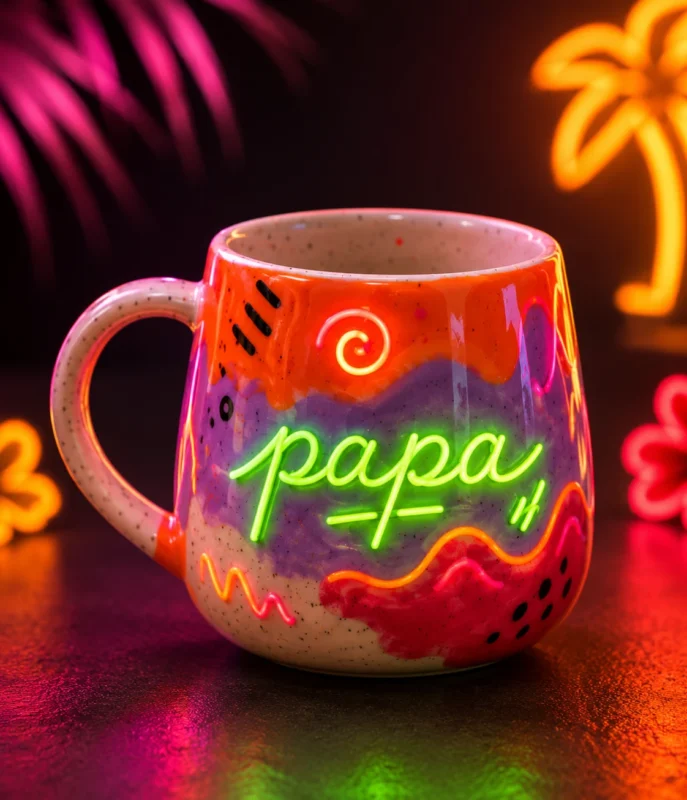
If you're thinking about gifts for the festive season, our Christmas workshop in Barcelona has more ideas for painting your own presents.
Aesthetic and minimalist mugs
- A continuous line drawing (one line art) of a face or a flower.
- Organic shapes in earthy tones.
- A single colour, with the handle in another.
- Little stars and moons in black on white.
- Hand-painted gingham checks.
Mugs that glow under UV light
- A galaxy with fluorescent planets and stars.
- Tropical flowers in neon colours.
- Hidden messages that only show up under black light.
- Psychedelic 70s patterns.
Mugs with fluorescent glazes are our speciality; if you like the idea, we go into more detail in our guide to UV ceramics in Barcelona. And if you're looking for more inspiration for plates and bowls, take a look at our ideas for painting ceramics.
Common mistakes when painting mugs (and how to avoid them)
Painting the area where your lips touch
Leave the top centimetre of the rim and the inside unpainted if you're not sure the paint is food-safe. You'll barely notice it and it's much more practical.
Coats that are too thick or too thin
A very thick coat can crack or run; a very thin one turns out see-through after firing. The ideal: several thin coats, each one well dried.
Trying to do everything with the same brush
A thick brush for details leaves uneven edges, and a fine one for backgrounds leaves streaks. Use at least two.
Painting mugs in Barcelona: what our studio in El Born is like
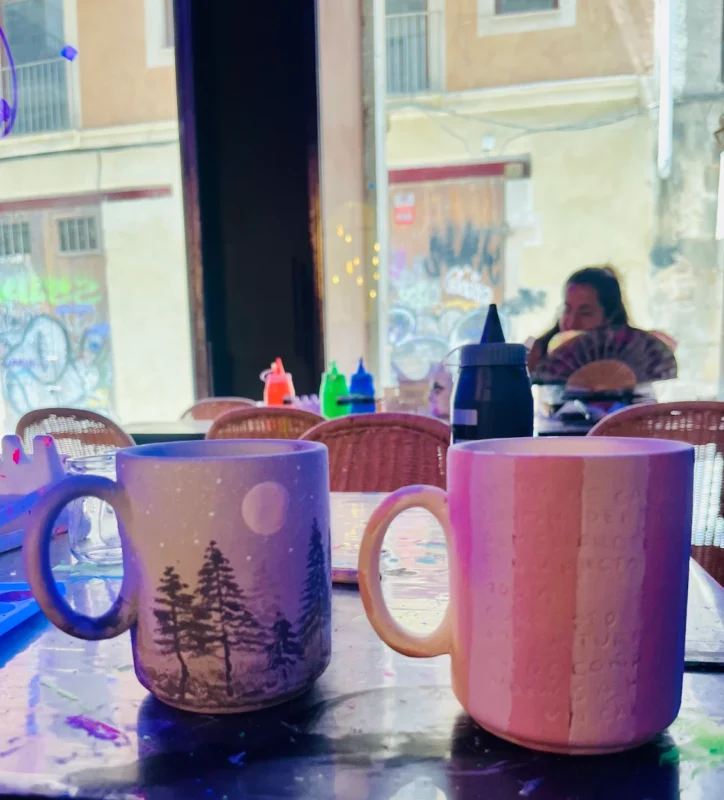
If you'd rather not worry about materials and kilns, at Paint Barcelona you can paint your mug in a guided session right in the heart of El Born.
What the session includes
The Ceramic Painting experience costs from €15 and includes materials, UV light and help from our team. You choose your piece (mugs, bowls or plates), pick your own design, trace it and paint it with fluorescent glazes. Then we fire the piece and you collect it later. See all the options on our experiences page and choose a day on the booking page.
For groups, birthdays and companies
Painting mugs as a group works really well for birthdays, hen and stag parties or work teams: everyone takes home their own piece and ends up with a useful keepsake. You'll find all the details on our page for groups and companies.
Give it as a gift
If it's for someone else, you can give the experience with our gift card and let them choose the design.
Frequently asked questions about painting mugs
What paint is used to paint ceramic mugs?
For a long-lasting result, ceramic glazes fired in a ceramic kiln. For decorating at home, porcelain paints or pens that are set in your home oven.
Can a hand-painted mug go in the dishwasher?
It depends on the paint. Mugs that are glazed and fired in a ceramic kiln are the most durable; those decorated with oven-bake paint are best washed by hand so they last longer. The pieces you paint at our studio are glazed and fired in a ceramic kiln; when you come to collect yours, we'll explain how to look after it.
How do you stop the paint on a mug from wearing off?
Clean the surface well before painting, use paint made specifically for ceramics, apply several thin coats and follow the firing process properly.
Can you paint mugs with pens?
Yes, with pens made specifically for porcelain or ceramics. They're ideal for lettering and details, but they need to be set in the oven following the instructions.
How long does a painted mug take to be ready?
At home, as long as it takes to dry and bake according to the manufacturer. At the studio, the piece is fired after the session and you collect it 3 days later.
Where can you paint mugs in Barcelona?
At Paint Barcelona, in El Born, you can paint mugs, bowls and plates with fluorescent glazes and UV light, with no experience needed. Book your session here.